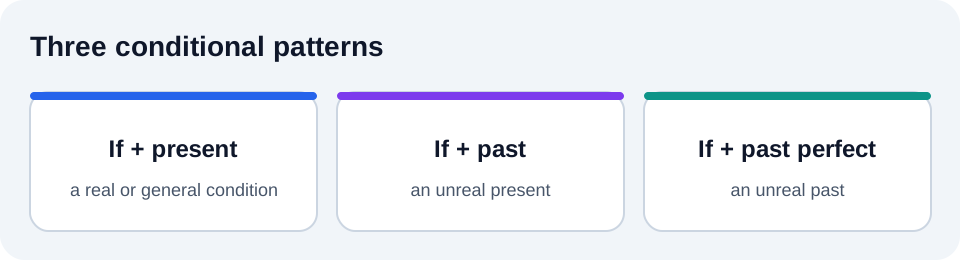
These common conditional patterns help answer a useful question: how real is the condition? If it is always true, use the zero conditional (if + present, present). If it is a realistic future, use the first (if + present, will). If it imagines the present being different, use the second (if + past, would). If it imagines the past being different, use the third (if + had + participle, would have + participle). Mixed conditionals cross the time line: a past condition with a present result, or a present condition with a past result.
Work through the 28 sentences below from warm-up to challenge. Each click is checked on the spot with a one-line explanation of the rule, so you always know why an answer is right — not just that it is right.
Conditionals Quiz: 28 Questions
Level 1 · zero & first conditional
Level 2 · second conditional (unreal present)
Level 3 · third & mixed conditionals
Answer key and explanationsOpen after you finish the quiz.
- 1. boilsA scientific fact that is always true — zero conditional: if + present simple, present simple. No will anywhere.
- 2. will cancelA realistic future possibility — first conditional: if + present simple, will + verb. Raining tomorrow is possible, so will fits.
- 3. getMixing those colors always produces green — a general truth, so zero conditional. First conditional (will get) is possible for a one-time future prediction, but the plain present is the natural choice for a fact.
- 4. missesFor this ordinary first conditional, use present simple in the if-clause and will in the result: If she misses the bus, she will be late. Will can appear after if in other meanings, such as willingness; that is not the meaning here.
- 5. stopsPressing the button always stops the machine — a cause-and-effect fact, so zero conditional: if + present, present.
- 6. haveFirst conditional: the if-clause stays in the present simple (have) even though the meaning is future; the will lives in the main clause (I'll call).
- 7. will leaveOne specific future event (tomorrow's drill) — first conditional with will. The zero conditional (leaves) would describe a general rule, not tomorrow.
- 8. dieA general truth about plants — zero conditional. If + present simple, present simple: don't get… die.
- 9. seeAgain the first-conditional pattern: present simple after if (see), will + verb in the result clause (I'll give).
- 10. wereThe speaker is not rich — unreal present, so second conditional: if + past, would + verb. Were is the classic form for all persons.
- 11. wonUnreal imagination about the present/future — second conditional uses the past simple in the if-clause: won… would buy.
- 12. knewI don't know how — unreal, so past simple after if: knew. The would in the main clause is the marker of the second conditional.
- 13. hadHe doesn't have time — the second conditional puts the if-clause in the past simple (had) to signal unreality, not past time.
- 14. wouldIf I were you… would + verb is the fixed advice pattern. Both clauses follow the second-conditional shape: were (past) + would apologize.
- 15. wereUnreal comparison with the present — if the weather were better (past subjunctive). Were is preferred in careful writing; the main clause already has would.
- 16. would tellDogs cannot talk — pure imagination. Second conditional: if + past (could talk), would + verb (would tell).
- 17. hadNo car in reality — past simple after if (had), would + verb in the result. This is the standard second-conditional shape.
- 18. stoppedShe hasn't stopped — unreal present. Past simple in the if-clause (stopped); would be in the main clause is already there.
- 19. livedImagining a different present — second conditional: if + past simple (lived), would + verb. Had lived would push it into the past (third conditional).
- 20. hadThird conditional — regret about the past: if + had + past participle (had known), would have + participle (would have come).
- 21. had studiedThe exam is over; she didn't study enough. Third conditional: if + had studied (past perfect), would have passed.
- 22. had leftA finished past situation that can't be changed — if + past perfect (had left), would have + participle in the result.
- 23. would beMixed conditional: past condition (hadn't missed), present result (now). Past condition + present outcome = would + verb (would be), not would have been.
- 24. would have wonThird conditional with the if-clause second: would have won (result) + if + hadn't been (past perfect). Same rule, reversed order.
- 25. would have helpedYou didn't tell me — a past regret, so third conditional: would have helped matches had told.
- 26. hadn't eatenYesterday's result traced to a past cause — third conditional: if + hadn't eaten (past perfect negative).
- 27. had takenMixed conditional: the advice was last year (had taken — third-conditional if-clause), the result is now (would be… now). Without last year, took could also work as a second conditional about her habits.
- 28. had hadThe tricky had had is correct: if + had (auxiliary) + had (main verb, past participle of have). Third conditional, unreal past.
The Four Conditionals in One Table
Every conditional is a pairing of an if-clause form with a result-clause form. Learn the pairings, and the 28 questions above become pattern recognition instead of guessing.
- Zero — always true: If + present simple, present simple. (If you heat ice, it melts.)
- First — real future: If + present simple, will + verb. (If it rains, we will stay in.)
- Second — unreal present/future: If + past simple, would + verb. (If I had time, I would help.)
- Third — unreal past: If + had + participle, would have + participle. (If I had known, I would have come.)
- Mixed — past cause, present result: If + had + participle, would + verb. (If I had studied medicine, I would be a doctor now.)
- Mixed — present state, past result: If + past simple, would have + participle. (If I weren't so shy, I would have spoken to her at the party.)
Check the reality, not the tense: past simple after if does not mean past time in the second conditional — it means unreal.
The #1 Conditional Mistake: Will or Would After If
The error teachers correct most often in conditionals is will or would inside the if-clause: If it will rain, we will cancel; If I would have time, I would help. For ordinary predictions and hypotheses, the if-clause takes a present or past form and the modal goes in the result: if it rains, we will cancel; if I had time, I would help.
The same applies in questions and negatives: What will you do if you don't get the job? — will appears once, in the main clause. There are real exceptions, but they carry a different meaning: if you will wait here a moment (a polite request, = if you are willing), if it would help, I can stay late (= if it is the case that it would help).
Second Conditional: Were or Was?
In the second conditional, were is the traditional form for every subject: if I were, if she were. It is strongest in fixed expressions (if I were you, as it were) and in formal writing. If I was / if she was is standard in everyday speech and informal writing, and general English exams do not treat it as an error. In formal writing, and always in the phrase if I were you, were is the safer choice.
Mixed Conditionals Without the Headache
Mixed conditionals are not a fifth type; they are the second and third sharing a sentence. The common pattern has a past cause and a present result: the if-clause takes the third-conditional form (had + participle) and the result takes the second-conditional form (would + verb): if I had saved money, I would be free now.
The reverse mix is less frequent but just as correct: a present (or permanent) state explains a past result. If I spoke French, I would have applied for the Paris job — I don't speak French now, so I didn't apply then.
Test every mixed sentence with two time questions: when is the condition true, and when is the result true? Past condition → had + participle; present condition → past simple; past result → would have + participle; present result → would + verb. If both point to the same time, the sentence isn't mixed at all.
Where Learners' Conditional Errors Come From
Several languages put a future form after if when the meaning is future. Russian (если будет дождь) and Polish (jeśli będzie padać) both do, which produces If it will rain tomorrow, we will stay home. English marks the future only once, in the result clause.
Other languages mark the hypothetical in both clauses. Russian uses бы in both halves (если бы я знал, я бы пришёл), and colloquial German often has würde on both sides (wenn ich Zeit haben würde, würde ich helfen). Translated word for word, that gives If I would know, I would come. English keeps would out of the if-clause.
Chinese, Japanese, Indonesian, and Thai do not have to mark tense on the verb; time comes from context words. Speakers of these languages often understand the meaning perfectly but leave the verb unmarked: If I have more time yesterday, I finish the report. The fix is to check every if-sentence for two things: the time of each clause, and whether it is real or imagined.
Write three true sentences about your own life: one plan (first conditional), one daydream (second), one regret (third). Then check the if-clause of each for will or would.
Keep practicing
Frequently Asked Questions
What are the 4 types of conditionals in English?
Zero (always true: if + present, present), first (real future: if + present, will), second (unreal present: if + past, would + verb), and third (unreal past: if + had + participle, would have + participle). Mixed conditionals combine a past cause with a present result.
When do I use 'were' instead of 'was' in conditionals?
Were works for all subjects and is the safer choice in formal writing: if I were you, if she were richer. If I was / if she was is standard in informal English. In the fixed advice phrase if I were you, use were.
What is a mixed conditional?
A mixed conditional combines two time frames. Most often it is a past condition with a present result (If I had taken that job, I would live in Berlin now); it can also be a present condition with a past result (If I were braver, I would have said something).
Turn Conditional Rules Into Reflexes
Paste your own sentences into PromGee's free grammar checker and get each conditional explained, so the pattern sticks on text you actually write.
Practice With My Own Sentences