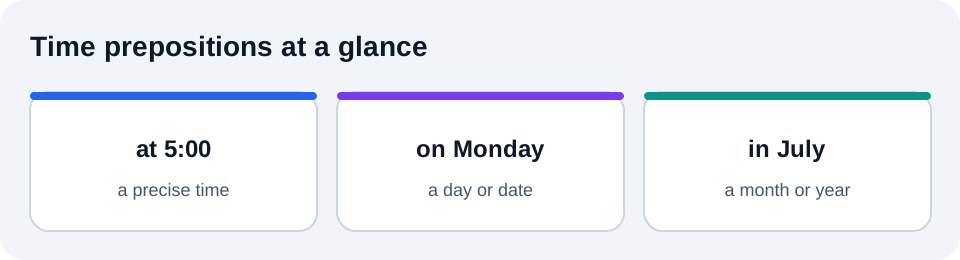
核心要点速览 (Executive Summary)
掌握英语三大核心介词 In, On, At 的关键在于“倒金字塔法则(The Inverted Pyramid)”:从底座最宽(最宽泛、大范围)逐步收窄至塔尖(最精准、单点)。
年份/世纪/月份/国家/城市/三维立体内部(in 2026, in China, in the room)。
具体某天/星期/街道/附着表面/公共交通(on Monday, on the wall, on a bus)。
具体时刻/门牌号/交叉点/精准地标(at 8:30 PM, at No. 10 Oxford St, at the door)。
一、倒金字塔模型全景图解
无论是描述时间(Time)还是空间地点(Place),倒金字塔模型都能提供清晰的坐标参照:
| 介词 | 金字塔层级 | 时间维度 (Time) | 空间维度 (Place) |
|---|---|---|---|
| IN | 顶部(最大、最宽泛) | 世纪、年代、年份、月份、季节: in the 21st century, in 2026, in August, in summer, in the morning | 国家、省份、城市、三维封闭大空间: in China, in Beijing, in the garden, in a room, in a building |
| ON | 中间(具体某天、面与线) | 具体日期、星期几、节日当天: on Monday, on May 15th, on Christmas Day, on my birthday, on Friday night | 街道、道路、平面接触、电子媒介: on Oxford Street, on the table, on the floor, on the internet, on TV |
| AT | 塔尖(最精准的单一聚焦点) | 具体时分秒、精准时刻、节日期间: at 7:45 AM, at noon, at midnight, at the moment, at sunrise | 具体门牌地址、精确交叉口、功能性点位: at 221B Baker Street, at the bus stop, at the entrance, at the corner |
二、交通工具介词:身体姿态与可走动性法则
很多人背了一堆交通工具搭配却依然经常选错。其实只需在脑海中想象你登上该工具时的身体动作:
ON 交通工具(开阔底板、可直立行走)
你进入时是“踏上”一个平面,内部有通道供人站立走动:
✅ on a bus (公交车)
✅ on a train (火车)
✅ on a plane (飞机)
✅ on a ship / ferry (轮船/渡轮)
✅ on a bike / motorcycle (自行车/摩托车,跨坐表面)
IN 交通工具(狭小空间、弯腰钻入)
你必须低头弯腰钻进去,进去后只能坐着无法站立走动:
✅ in a car (小轿车)
✅ in a taxi / cab (出租车)
✅ in a helicopter (直升机)
✅ in a small boat / canoe (皮划艇/小舟)
三、容易导致扣分的中式介词高频陷阱
泛指“在早上”是 in the morning,但一旦有具体星期修饰,如“在周五早晨”,天(Day)覆盖部(Part) → 必须是 on Friday morning。
到达大城市/国家用 arrive in (arrive in London);到达具体建筑/车站/机场小地点用 arrive at (arrive at the airport)。
在房间内部墙角(三维凹陷处)用 in the corner of the room;在室外十字路口街道拐角(交叉点)用 at the street corner。
四、实战自测:In, On, At 介词通关测验
点击展开问题,检验你的介词空间与时间直觉:
1. The global conference will take place ___ 9:00 AM ___ Monday morning.▼
正确答案:at; on
AI 解析:具体时间点 9:00 AM 位于倒金字塔塔尖,用 at;Monday morning 为具体某天的上午,遵循天数规则用 on。
2. She left her smartphone ___ the back seat of the taxi.▼
正确答案:on 或 in (后座表面用 on the seat / 空间用 in the taxi)
AI 解析:在座椅表面上用 on the back seat;若直接接出租车则为 in the taxi。
3. We will meet our clients ___ the airport ___ arrival.▼
正确答案:at; upon / on
AI 解析:机场作为具体的会合地点地标使用 at the airport;表示“一到达就...”固定搭配为 on/upon arrival。
用 PromGee 介词专项题库,建立本能般的空间时间语感
PromGee Windows 软件内置专门的【介词与固定搭配】专项题库,不仅包含 in/on/at,还涵盖 by, with, for, about 等 20+ 种高频介词的细微语境辨析与即时 AI 中文讲评!
五、常见问题解答 (FAQ)
为什么说汉语的‘在’字导致了中国学生的介词困境?
在汉语中,我们用一个‘在’字可以包揽所有场景(在中国、在墙上、在周五、在7点、在车里)。而在英语中,介词精确表达了空间维度(点/线/面/体)与时间颗粒度(年/天/时分秒)。若直接将‘在’机械套用,就会导致介词全盘混乱。
为什么在公共汽车上用 'on a bus',而在小汽车里用 'in a car'?
核心在于‘可走动性与身体姿态法则(The Walkability Rule)’:当交通工具内部空间开阔,人可以直立行走、或踏上平坦的大底板时,用 'on'(on a bus, on a train, on a plane, on a ship);而当交通工具空间狭小,人必须弯腰钻进去、且只能坐着无法行走时,用 'in'(in a car, in a taxi, in a helicopter)。
在具体某一天上午,为什么用 'on Friday morning' 而不是 'in'?
虽然泛指的上午是 'in the morning',但一旦前面加上了具体的某一天(Friday、May 1st、a rainy day),‘天’的层级(Day level → On)就覆盖了‘部分时间’的层级,必须优先遵循 On 的规则,因此是 'on Friday morning'。
在周末到底是用 'at the weekend' 还是 'on the weekend'?
两者都完全正确,属于英美英语差异:在英式英语(British English)中习惯说 'at the weekend';而在美式英语(American English)中更常说 'on the weekend'。在正式考试中两者均算满分答案。
六、练习例句:In, On, At 实战英文句子 (English Practice Sentences)
下面每组句子都对应一个真实语境,请先默读英文例句,再对照讲解检查你的判断是否贴合倒金字塔法则。出错很正常,关键是要找到错误的层级坐标:
- "I was born in 1998, and I grew up in a small town." —— 年份与大范围地点都属于金字塔底座,一律使用 in。
- "We arrived at the airport at noon." —— 机场是具体的会合地点,noon 是精准时刻,两者都用 at。
- "The meeting will start at 9 o'clock on Monday morning." —— 具体时刻用 at,具体某天的上午用 on。
- "She put the keys on the kitchen table." —— 桌面是平面接触面,用 on。
- "There is a painting on the wall in the living room." —— 墙是表面用 on,客厅是三维空间用 in。
- "He is sitting in the car while his friend waits outside." —— 小汽车空间狭小,必须弯腰钻入,用 in。
- "We traveled on a bus across the city." —— 公交车有开阔底板,可站立走动,用 on。
- "The conference takes place in Shanghai on May 15th." —— 城市用 in,具体日期用 on。
- "I usually read the news in the morning before work." —— 泛指的上午属于时间段,用 in。
- "Let's meet at the corner of the street after lunch." —— 街道拐角是交叉点,用 at。
- "She got married in Friday" is wrong; the correct form is "She got married on Friday." —— 具体某一天必须用 on,不能用 in。
- "I will call you in the weekend" is a common mistake; use "on the weekend" in American English. —— 周末用 on the weekend(美式)或 at the weekend(英式)。
- "He lives at Beijing" sounds unnatural; the correct phrase is "He lives in Beijing." —— 城市是大范围地点,必须用 in。
- "We arrived in London late in the evening." —— arrive in 接大城市,in the evening 表泛指时段。
- "The cat is hiding under the bed in the bedroom." —— 卧室是封闭三维空间,用 in。
- "Please write your name at the top of the page." —— 页面上方是具体点位,用 at。
- "The train leaves at 7:30 PM from the platform." —— 7:30 PM 是精准时刻,用 at。
- "She listens to music on her phone while walking to school." —— 电子设备表面用 on。
- "My birthday is in August, on the 12th." —— 月份用 in,具体日期用 on,同句不冲突。
- "There were fifty students at the lecture in the main hall." —— 讲座是事件点位用 at,大厅是空间用 in。